

Agricultural Payload RC Spraying Drone – Remote Control Farming/UAV Application
Agricultural Payload RC Spraying Drone – Remote Control Farming/UAV Application
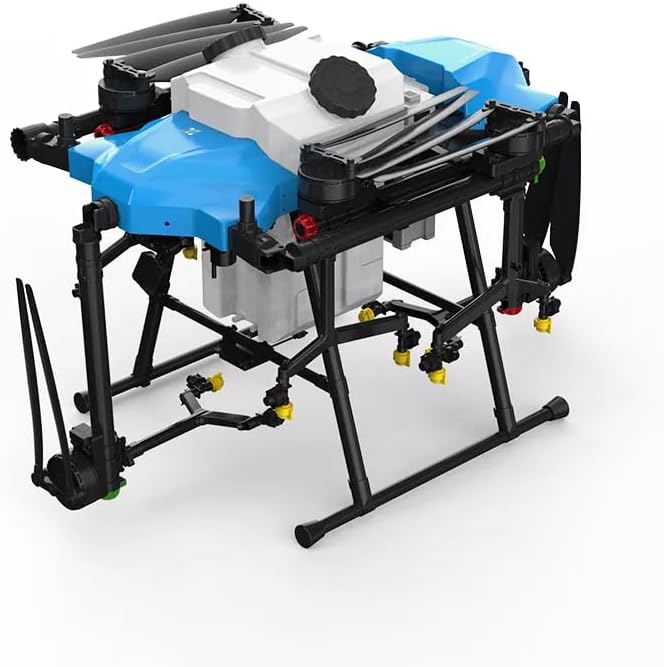
This agricultural payload RC spraying drone is built for farm, orchard, vineyard, and crop-field spraying applications. It combines a high-lift multirotor platform with a liquid spraying system, remote control operation, and battery power to help growers and land managers apply fertilizers, pesticides, or foliar feed. Designed for light commercial use and medium-sized agricultural plots, this drone helps reduce manual labor while increasing precision and coverage.
Flight Time and Battery Life
The drone is powered by a high-capacity battery system designed to handle the additional payload weight of liquid chemicals. Flight time varies based on tank load, but agricultural spray drones typically fly long enough per charge to cover a meaningful acreage before requiring a quick swap of batteries. Operators often plan spray missions in grid patterns to optimize battery and coverage efficiency.
Spraying System and Payload
Equipped with a dedicated liquid tank and pump system, the drone distributes fine droplets of water or agrochemicals over crops. The payload system includes nozzles and adjustable flow rates, allowing pilots to tune application thickness for different plant types, field sizes, or variable terrain. This controlled delivery helps reduce chemical waste and improve application accuracy versus handheld sprayers or traditional ground rigs.
Flight Range and Control
Using a standard remote controller and telemetry system, pilots can navigate the drone across fields with real-time location feedback. Many agricultural spray platforms also support waypoint navigation and programmable flight paths, enabling repeatable flights and consistent application across multiple passes. RF control range typically covers medium distances adequate for farm use.
Design, Build & Portability
The multirotor frame is designed for stability under load, with reinforced arms and vibration-dampening mounts to support the spraying system. Adjustable landing gear and central tank placement help maintain balance while airborne. Although larger than consumer drones, it remains foldable or transport-friendly for farm vehicles, trailers, or pickup beds.
Safety and Precision
Spraying drones must be flown with care: good practice includes adherence to chemical handling guidelines, safe takeoff/landing curves, and use in open fields with minimal obstacles. Many pilots recommend using GPS stabilization and altitude hold to maintain consistent spray height, as this increases uniformity of application and reduces drift from wind.
Price and Value
An agricultural spraying drone represents a significant investment versus standard hobby drones, but for growers managing multiple acres, it can deliver real savings in time, labor, and chemical usage. The combination of remote operation, GPS stabilization, and spray precision often results in better crop health and reduced waste.
User Feedback & Practical Insights
Pilots and farmers note that agricultural drones are transformative for crop care, especially in orchards or uneven terrain where ground sprayers have limited access. Training and practice improve spraying technique quickly, and many users find the drone enhances efficiency during peak spraying seasons.
Accessories and Upgrades
Common accessories include multiple tank options, spare pump kits, upgraded nozzles for variable droplet size, and extra high-capacity batteries. Some operators also integrate telemetry modules or tablet mapping software for enhanced mission planning and spray tracking.
Regulations and Legal Use
Agricultural spray drones fall under specific local aviation and agricultural chemical application regulations. Operators should be certified or licensed where required and always follow chemical handling and drift mitigation best practices. Compliance with altitude limits, buffer zones, and no-spray areas is critical for safety and legal use.
| Pros | Cons |
|---|---|
| ✓ Enables efficient remote crop spraying and coverage | ✗ Significantly more expensive than hobby drones |
| ✓ Reduces manual labor and improves application precision | ✗ Requires chemical handling knowledge and safety practices |
| ✓ Programmable flight paths improve repeatability | ✗ Larger size reduces portability versus consumer drones |
| ✓ Supports accessories like spare tanks and batteries | ✗ Regulatory compliance and licensing may be needed |
| ✓ Ideal for farms, orchards, vineyards, and open fields | ✗ Not suited for small gardens or indoor use |
Share